100 Healthy Homemade
Cat Food Recipes
Complete Culinary Guide
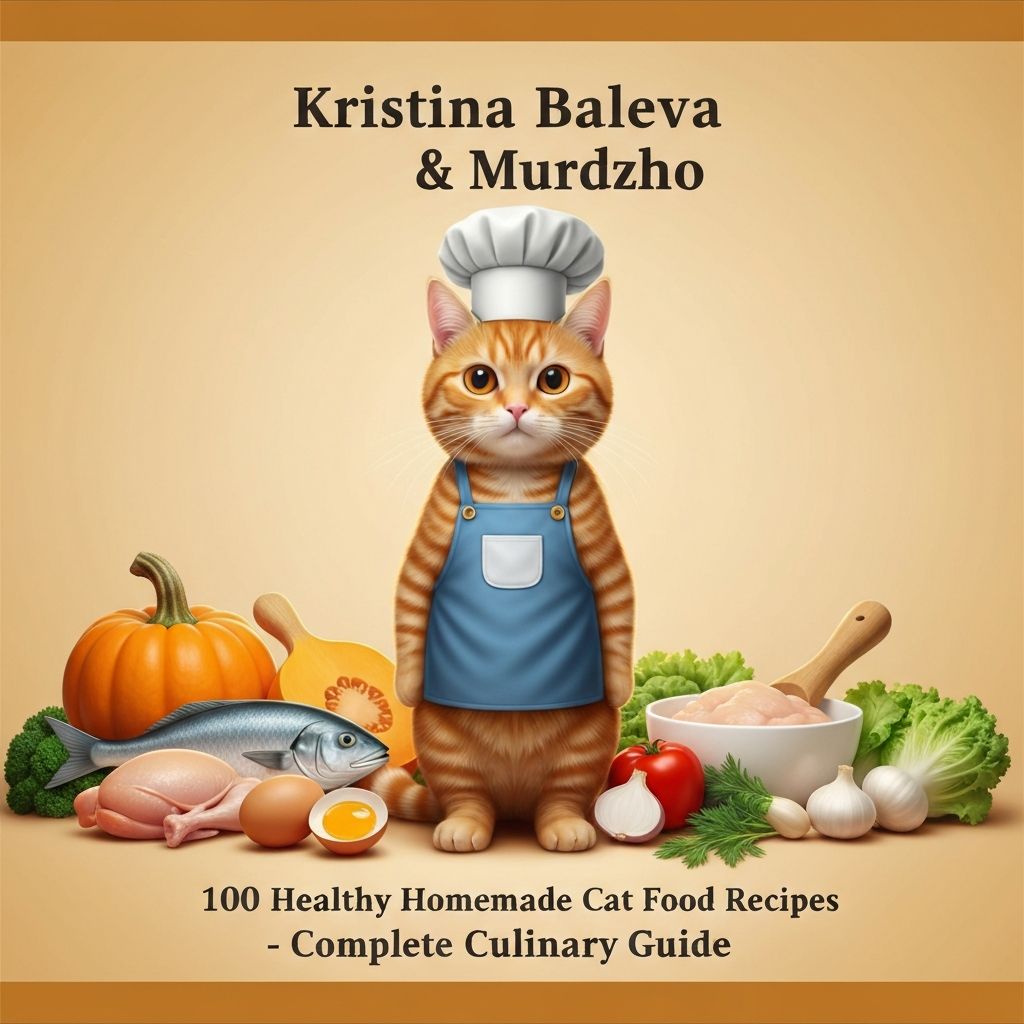
By Chef Murdzho & Kristina Baleva
The World's Best Cat Chef
Meet Chef Murdzho
Welcome to my kitchen! I am Murdzho, the world's best cat chef, and I am here to guide you through 100 delicious and healthy recipes for your beloved feline companions.
With years of experience in feline nutrition and a passion for cooking, I have created these recipes to ensure your cat gets the best nutrition possible while enjoying every single meal.
Table of Contents
PART 1: WELCOME & SAFETY GUIDE
PART 2: THE RECIPES
PART 3: BONUS MATERIAL
IMPORTANT DISCLAIMER & LEGAL NOTICE
Professional Advice Disclaimer
The recipes, nutritional guidelines, and information provided in this book ("100 Healthy Homemade Cat Food Recipes") are for educational, informational, and culinary entertainment purposes only. The content within this book is not intended to be a substitute for professional veterinary advice, medical diagnosis, or specialized veterinary treatment.
Always seek the advice of your veterinarian or a qualified veterinary nutritionist with any questions you may have regarding your cat's specific medical conditions, weight management goals, or unique dietary requirements. Never disregard professional veterinary advice or delay in seeking it because of something you have read in this book.
Nutritional Variations & Supplementation
Every cat is an individual with unique metabolic rates, health histories, and nutritional tolerances. The calorie counts provided in this book are calculated estimates based on standard nutritional data for raw and cooked ingredients. They are intended as general guidelines and may vary based on exact ingredient sourcing, fat content cuts, and cooking methods.
Felines require precise balances of essential vitamins, minerals, and amino acids—most notably taurine—which may not be present in adequate quantities in unsupplemented, long-term homemade diets. If you choose to feed your cat an exclusively homemade diet over an extended period, it is your responsibility to work alongside a veterinarian to source and include a professionally approved vitamin-mineral premium mix.
Assumption of Risk & Limitation of Liability
By using the recipes contained in this book, you acknowledge and agree that you are doing so entirely at your own risk. The author, publisher, and distributors of this book make no representations or warranties of any kind, express or implied, about the completeness, accuracy, reliability, or suitability of the recipes for any specific animal. Under no circumstances shall the author or publisher be held liable for any adverse reactions, illnesses, injury, allergic reactions, choking hazards, nutritional deficiencies, or any other health complications suffered by your pet resulting directly or indirectly from the preparation, handling, storage, or consumption of the meals presented in this guide.
Introduction: Feeding Your Cat with Love
Welcome to 100 Healthy Homemade Cat Food Recipes! If you have picked up this book, it means you care deeply about the health, happiness, and longevity of your feline companion. There is an undeniable joy in watching your pet rush to their bowl, purring with excitement, knowing that the food you are serving them was made with fresh, wholesome ingredients right in your own kitchen.
For many pet owners, commercial cat food has become a source of anxiety. Mass-produced kibble and canned foods are often packed with artificial preservatives, stabilizers, heavy grains, mystery meat by-products, and fillers that do little to support your cat's health. By taking control of what goes into your cat's bowl, you are eliminating the guesswork. You know exactly where the protein comes from, how fresh the vegetables are, and that no hidden chemicals are making their way into your pet's system.
Cooking for your cat is more than just meal preparation—it is an act of love. Fresh food supports a shinier coat, cleaner teeth, better digestion, smaller and less smelly litter box deposits, and significantly higher energy levels.
Understanding Your Little Predator
Before you jump into the kitchen, it is vital to understand that cats are completely different from dogs or humans. They are what biologists call obligate carnivores. This means their bodies are strictly engineered to thrive on animal proteins and fats. They do not need complex carbohydrates, sugars, or heavy grains. In fact, a cat's digestive system is short and fast, optimized to break down meat efficiently.
In this book, you will find that every recipe prioritizes high-quality proteins—chicken, turkey, beef, and fish. The vegetables and grains included are used in very strict, tiny amounts, acting purely as a source of healthy fiber to aid digestion and mimic the natural stomach contents of a feline's ancestral prey.
Making It Work for Your Routine
You do not need to be a professional chef to cook for your cat. The recipes in this book are designed to be simple, fast, and highly adaptable. Whether you want to prepare a special Sunday feast for your pet, add a fresh topper to their daily meals, or completely transition them to a homemade diet under your vet's supervision, this book provides the blueprint.
As you flip through these chapters, remember that patience is key. Some cats will dive into fresh food immediately, while others—addicted to the artificial flavor enhancers in commercial food—might take a few weeks to adjust. Take it slow, keep the meals plain and fresh, and enjoy this new journey of nurturing your pet with real, nutritious food.
Thank you for choosing to feed your cat with love. Let's get cooking!
The Golden Rules of Feline Nutrition
Feeding a cat a homemade diet requires strict adherence to their unique biology. To keep your cat healthy, active, and safe over the long term, you must memorize and follow these three foundational rules.
1. High Protein, Zero Carbohydrates
Cats have no biological requirement for carbohydrates. In the wild, their diet consists of almost 100% protein and fat from small prey. Their liver is constantly breaking down protein for energy. If you fill their bowl with grains, potatoes, or rice, their bodies cannot process them efficiently, which quickly leads to obesity and diabetes. The vegetables and grains in this book are kept under 5% of the total meal volume, serving strictly as a source of moisture and digestive fiber.
2. The Critical Role of Taurine
Taurine is an essential amino acid that cats cannot manufacture on their own. It is found exclusively in animal tissue, with the highest concentrations located in active muscles like the heart, dark meat, and liver.
The Danger: A lack of taurine in a cat's diet causes irreversible blindness and a fatal heart condition called Dilated Cardiomyopathy (DCM).
The Rule: Cooking meat reduces its natural taurine content. If you use these recipes to completely replace commercial cat food permanently, you must stir a veterinary-approved taurine powder supplement into the food after it cools.
3. The Calcium-to-Phosphorus Balance
Meat is naturally very high in phosphorus. However, a cat's body requires a strict 1:1 balance between calcium and phosphorus to keep their bones and kidneys healthy. In nature, cats get calcium by consuming the tiny bones of their prey. Because feeding cooked bones is highly dangerous (they splinter and puncture organs), a long-term homemade diet requires a calcium substitute, such as fine eggshell powder or bone meal supplement, added under a vet's guidance.
Toxic Ingredient Checklist (Never Add These)
Your kitchen contains many everyday foods that are safe for humans but deadly to felines. Ensure none of these ever touch your cat's bowl.
Onions, Garlic, Leeks, and Chives
All members of the Allium family contain compounds that destroy a cat's red blood cells, causing severe, life-threatening anemia. This applies to raw, cooked, and powdered forms.
Grapes and Raisins
Even a tiny amount can cause sudden, acute kidney failure in cats. The exact toxin is unknown, making avoidance absolute.
Chocolate and Caffeine
Both contain methylxanthines (like theobromine), which cause vomiting, muscle tremors, abnormal heart rhythms, and fatal seizures.
Xylitol
This artificial sweetener is commonly found in peanut butter, yogurt, and baked goods. It causes a massive insulin spike in cats, leading to severe hypoglycemia and liver failure.
Raw Egg Whites
Raw whites contain a protein called avidin. Avidin binds to biotin (Vitamin B7), preventing its absorption and causing skin and coat issues. Always hard-boil or scramble eggs completely before serving.
Cooked Bones
Cooking changes the cellular structure of bones, making them brittle. They splinter easily when chewed, causing choking hazards or tearing the stomach and intestines.
Alcohol and Unbaked Dough
Even a teaspoon of alcohol can cause brain damage and liver failure. Unbaked yeast dough expands inside the warm stomach, creating toxic ethanol and causing severe bloat.
Kitchen Hygiene & Portion Storage Guidelines
Fresh, homemade cat food contains zero synthetic preservatives. This means it spoils at the exact same rate as the food you cook for your human family. Use these rules to keep the meals sanitary and fresh.
Safe Handling Practice
- Wash Everything: Clean all cutting boards, knives, blenders, and bowls with hot, soapy water before and immediately after preparing meals to prevent Salmonella and E. coli contamination.
- Separate Boards: Use a dedicated cutting board for raw meats and a separate one for vegetables.
- No Spices: Never use salt, pepper, oils, butter, or human stocks. Cook meats entirely plain by steaming, baking, or boiling in plain water.
Storage and Freezing Rules
- The 2-Day Fridge Limit: Once a batch is cooked and cooled to room temperature, store it in an airtight glass or BPA-free plastic container. Keep it in the refrigerator for a maximum of 48 hours.
- The 3-Month Freezer Rule: Portion the remaining batch into daily meals using small freezer bags or silicone ice-cube trays. Freeze them for up to 3 months.
- Safe Thawing: Never thaw frozen cat food on the kitchen counter at room temperature, as this invites rapid bacterial growth. Always move the frozen portion into the refrigerator 24 hours before serving to let it thaw safely.
Step-by-Step Transition Plan for Your Cat
Cats are creatures of habit. They are highly sensitive to changes in texture, smell, and temperature. Introducing a fresh diet too quickly can cause a stubborn refusal to eat or temporary digestive upset. Follow this gentle 10-day transition timeline.
Days 1-3 (90% Old, 10% New)
Serve your cat their usual commercial food, but place 1 tablespoon of the fresh homemade food right next to it or mixed in. This allows them to get used to the new smell without pressure.
Days 4-5 (75% Old, 25% New)
Mix a quarter of the fresh recipe directly into three-quarters of their regular commercial meal. Watch their stool consistency closely.
Days 6-7 (50% Old, 50% New)
Move to an even half-and-half split. At this point, your cat's digestive enzymes are adapting to processing real, whole meats.
Days 8-9 (25% Old, 75% New)
The bowl should now be mostly fresh, homemade food with just a small topper of their old food to maintain familiarity.
Day 10 (100% Fresh)
Your transition is complete! Your cat is now eating a fully fresh, homemade diet.
Pro-Tip for Stubborn Eaters:
Commercial pet food is sprayed with artificial fats to make it highly addictive. If your cat refuses the fresh food, try warming it up to body temperature (~38°C) to release the natural meat aromas, or sprinkle a tiny crunch of their favorite old kibble on top.
Chapter 1
Chicken & Poultry Recipes
Recipes 1-28
High-protein, easily digestible meals featuring chicken breasts, poultry broth, and gentle nutrient mixes.
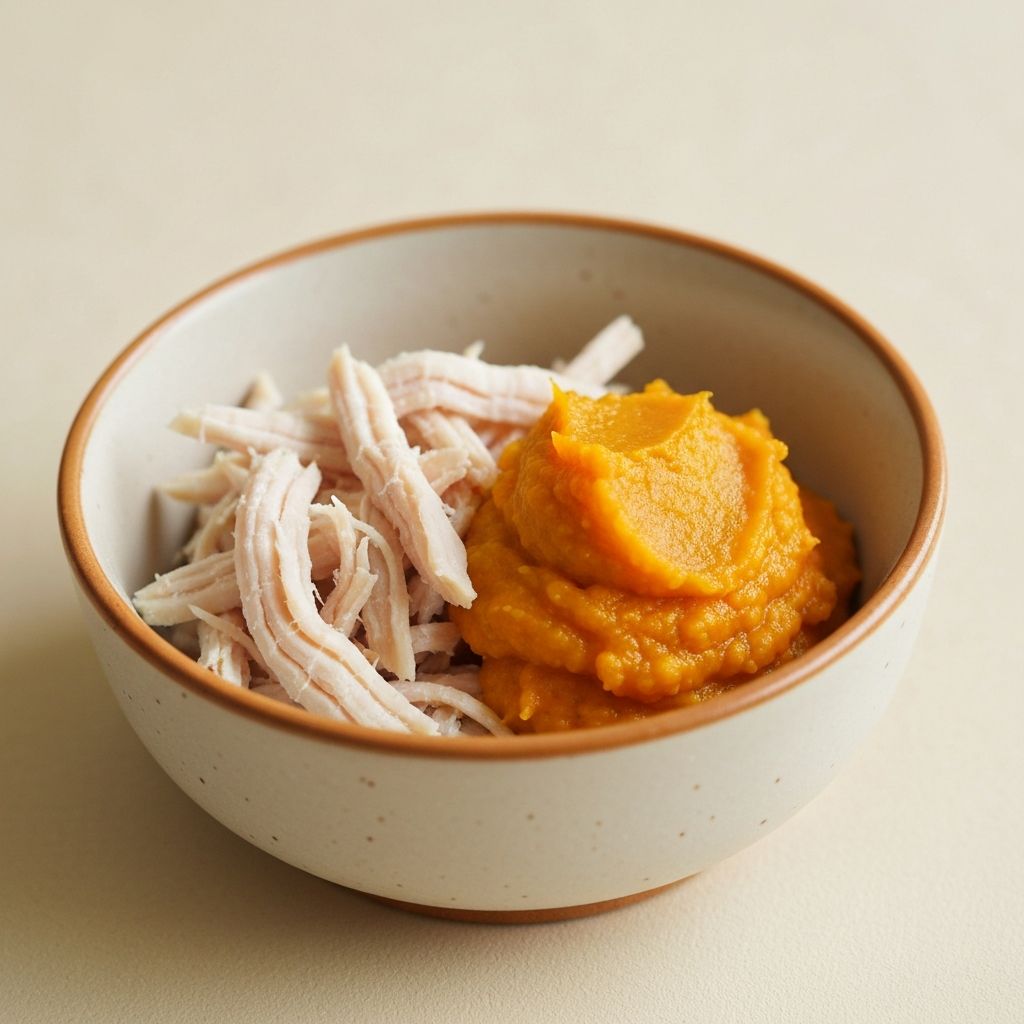
1. Chicken with Pumpkin
Ingredients: 150 g chicken breast, 2 tbsp cooked pumpkin puree, 1 tsp fish oil
Preparation: Boil the chicken breast until fully white throughout. Shred finely. Mix thoroughly with plain, unseasoned pumpkin puree and stir in the fish oil.
Calorie Content: ~214 kcal
2. Chicken with Carrot and Rice
Ingredients: 120 g chicken breast, 1 tbsp cooked white rice, 1 tbsp cooked carrot
Preparation: Cook all ingredients thoroughly. Chop the chicken and carrot into tiny pieces, combine with the rice, and pulse lightly in a blender.
Calorie Content: ~165 kcal
3. Creamy Chicken with Zucchini
Ingredients: 150 g chicken breast, 2 tbsp cooked zucchini, 1 tbsp sodium-free cooking broth
Preparation: Cook the chicken and zucchini until soft. Place them into a blender with the warm cooking broth and blend until it reaches a smooth, creamy texture.
Calorie Content: ~178 kcal
4. Chicken Liver with Pumpkin
Ingredients: 100 g chicken liver, 2 tbsp cooked pumpkin puree, 1 tsp olive oil
Preparation: Cook the chicken liver thoroughly to eliminate bacteria. Finely mash the liver, blend it with the pumpkin, and fold in the olive oil. Feed liver in moderation.
Calorie Content: ~168 kcal
5. Chicken with Egg
Ingredients: 130 g chicken breast, 1 hard-boiled egg
Preparation: Boil the chicken breast completely. Hard-boil the egg. Chop both ingredients finely and mix together thoroughly in a bowl.
Calorie Content: ~225 kcal
6. Chicken with Broccoli
Ingredients: 140 g chicken breast, 1 tbsp cooked broccoli
Preparation: Steam the chicken breast and broccoli florets until tender. Shred the chicken and finely chop the broccoli before tossing them together.
Calorie Content: ~166 kcal
7. Chicken with Oats
Ingredients: 120 g chicken breast, 1 tsp plain oats, a little warm water
Preparation: Cook the plain oats in water until soft. Mince the cooked chicken breast and stir it into the warm oatmeal mixture until completely integrated.
Calorie Content: ~152 kcal
8. Chicken Soup for Cats
Ingredients: 150 g chicken breast, 300 ml water, 1 tbsp finely diced carrot
Preparation: Simmer the chicken and carrot on low heat until the meat is fully cooked. Shred the chicken, return it to the plain broth with the soft carrots, and serve lukewarm.
Calorie Content: ~180 kcal
9. Chicken with Cottage Cheese
Ingredients: 120 g chicken breast, 1 tbsp plain, unsalted cottage cheese
Preparation: Cook the chicken breast completely and mince it. Allow the meat to cool down entirely, then fold in the cottage cheese.
Calorie Content: ~152 kcal
10. Chicken with Parsnip
Ingredients: 140 g chicken breast, 1 tbsp cooked parsnip
Preparation: Cook the parsnip and chicken until fully tender. Blend both ingredients into a uniform, soft consistency.
Calorie Content: ~167 kcal
11. Chicken with Liver and Zucchini
Ingredients: 100 g chicken breast, 40 g chicken liver, 1 tbsp cooked zucchini
Preparation: Thoroughly boil the chicken breast and liver. Mince the meats and mix well with the finely chopped zucchini.
Calorie Content: ~165 kcal
12. Chicken with Broccoli and Pumpkin
Ingredients: 130 g chicken breast, 1 tsp cooked broccoli, 1 tbsp pumpkin puree
Preparation: Fully cook the chicken and vegetables. Finely chop the broccoli florets and mix into the chicken shreds along with the pumpkin puree.
Calorie Content: ~158 kcal
13. Chicken Soup with Pumpkin
Ingredients: 150 g chicken breast, 1 tbsp pumpkin cubes, 250 ml water
Preparation: Simmer the chicken and pumpkin together until tender. Shred the chicken, mash the pumpkin into the nutrient-rich broth, and serve warm.
Calorie Content: ~178 kcal
14. Chicken with Pumpkin and Egg
Ingredients: 130 g chicken breast, 1 tbsp pumpkin puree, half a hard-boiled egg
Preparation: Shred the fully cooked chicken. Mince the hard-boiled egg and toss with the chicken and plain pumpkin puree.
Calorie Content: ~194 kcal
15. Chicken with Carrot and Cottage Cheese
Ingredients: 130 g chicken breast, 1 tsp cooked carrot, 1 tbsp plain cottage cheese
Preparation: Mince the cooked chicken breast and carrot. Let it cool, then stir it together with the cottage cheese.
Calorie Content: ~164 kcal
16. Chicken with Zucchini and Oats
Ingredients: 130 g chicken breast, 1 tbsp cooked zucchini, 1 tsp cooked plain oatmeal
Preparation: Combine the fully cooked, shredded chicken with the soft zucchini and plain oatmeal. Mix thoroughly.
Calorie Content: ~165 kcal
17. Chicken with Broccoli and Egg
Ingredients: 130 g chicken breast, 1 tsp cooked broccoli, half a hard-boiled egg
Preparation: Finely chop the fully cooked chicken breast, broccoli florets, and half of a hard-boiled egg. Toss together.
Calorie Content: ~190 kcal
18. Chicken with Pumpkin and Fish Oil
Ingredients: 130 g chicken breast, 1 tbsp pumpkin puree, 1 tsp cat-safe fish oil
Preparation: Mix the shredded cooked chicken with plain pumpkin puree. Drizzle with fish oil just before serving.
Calorie Content: ~196 kcal
19. Chicken with Carrot and Oats
Ingredients: 130 g chicken breast, 1 tsp cooked carrot, 1 tsp cooked plain oats
Preparation: Cook plain oatmeal in water. Mix with finely minced cooked chicken and carrots.
Calorie Content: ~162 kcal
20. Chicken with Broccoli and Rice
Ingredients: 130 g chicken breast, 1 tsp cooked broccoli, 1 tsp cooked white rice
Preparation: Chop the cooked broccoli florets and chicken breast finely. Stir in the cooked rice.
Calorie Content: ~162 kcal
21. Chicken Liver with Carrot
Ingredients: 100 g chicken liver, 1 tsp cooked carrot
Preparation: Boil the liver completely until no red remains inside. Mash with a fork and stir in the carrot puree.
Calorie Content: ~118 kcal
22. Chicken with Cottage Cheese and Oats
Ingredients: 130 g chicken breast, 1 tbsp plain cottage cheese, 1 tsp cooked plain oats
Preparation: Shred the cooked chicken. Mix it with the plain oatmeal and fold in the cottage cheese.
Calorie Content: ~172 kcal
23. Chicken with Parsnip (Light blend)
Ingredients: 130 g chicken breast, 1 tsp cooked parsnip
Preparation: Fully cook both ingredients. Blend lightly in a small food processor until soft and easily digestible.
Calorie Content: ~154 kcal
24. Chicken with Pumpkin and Broccoli
Ingredients: 130 g chicken breast, 1 tbsp pumpkin puree, 1 tsp cooked broccoli
Preparation: Combine minced cooked chicken with broccoli and smooth pumpkin puree.
Calorie Content: ~158 kcal
25. Chicken with Zucchini and Cottage Cheese
Ingredients: 130 g chicken breast, 1 tbsp cooked zucchini, 1 tbsp plain cottage cheese
Preparation: Mince the cooked chicken breast and zucchini, cool down, and stir in the cottage cheese.
Calorie Content: ~165 kcal
26. Chicken with Rice and Pumpkin
Ingredients: 130 g chicken breast, 1 tsp cooked white rice, 1 tbsp pumpkin puree
Preparation: Mix the cooked rice and pumpkin together, then fold in the fully cooked, shredded chicken meat.
Calorie Content: ~166 kcal
27. Chicken with Egg and Pumpkin
Ingredients: 130 g chicken breast, half a hard-boiled egg, 1 tbsp pumpkin puree
Preparation: Mince the egg and chicken, then fold them into the plain pumpkin puree until well combined.
Calorie Content: ~194 kcal
28. Chicken with Zucchini and Carrot
Ingredients: 130 g chicken breast, 1 tbsp cooked zucchini, 1 tsp cooked carrot
Preparation: Finely chop all ingredients after they are fully cooked and toss together evenly.
Calorie Content: ~155 kcal
Chapter 2
Fish & Seafood Recipes
Recipes 29-56
Omega-3 rich specialties including salmon, tuna, cod, and mackerel paired with healthy fibers.
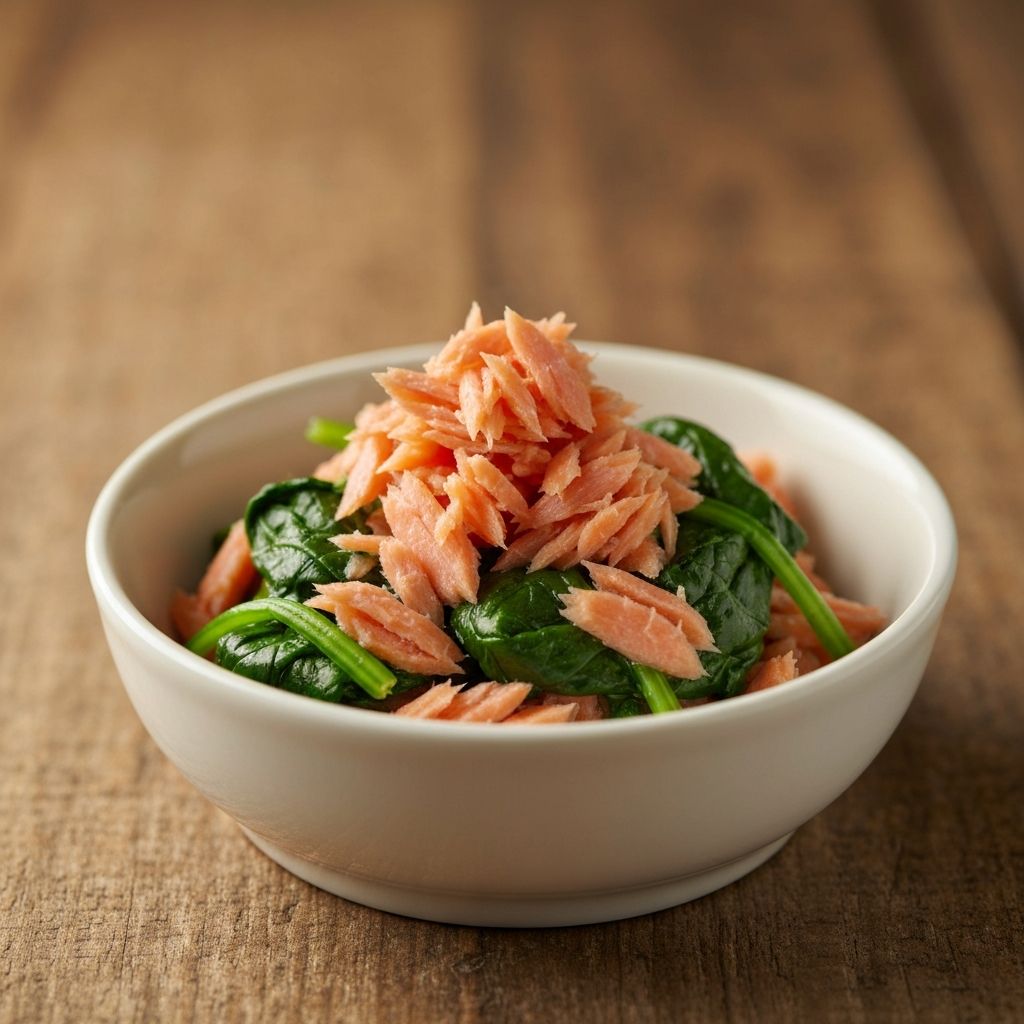
29. Salmon with Zucchini
Ingredients: 120 g fresh salmon fillet, 2 tbsp cooked zucchini
Preparation: Bake the salmon fillet completely. Carefully remove any skin and bones. Flake the meat and mix with cooked zucchini.
Calorie Content: ~186 kcal
30. Cod with Rice
Ingredients: 130 g cod fillet, 1 tbsp cooked white rice
Preparation: Steam the cod until it flakes easily. Meticulously check for bones. Shred the fish and mix with the cooked rice.
Calorie Content: ~114 kcal
31. Tuna with Pumpkin
Ingredients: 100 g tuna canned in water, 2 tbsp cooked pumpkin puree
Preparation: Drain the tuna completely to remove excess sodium. Mix the tuna flesh well with plain pumpkin puree.
Calorie Content: ~122 kcal
32. Mackerel with Carrot
Ingredients: 120 g fresh mackerel, 1 tbsp cooked carrot
Preparation: Cook the mackerel completely. Remove all bones thoroughly. Flake the meat and blend or mix with cooked carrot puree.
Calorie Content: ~245 kcal
33. White Fish with Egg
Ingredients: 120 g white fish fillet (cod/haddock), half a hard-boiled egg
Preparation: Poach the white fish and bone it carefully. Finely shred the fish and mix with the mashed hard-boiled egg.
Calorie Content: ~134 kcal
34. Fish Mousse
Ingredients: 130 g salmon fillet, 1 tbsp water, 1 tsp cooked pumpkin
Preparation: Bake the salmon, check for bones, and blend with 1 tbsp of water and the pumpkin until a smooth mousse is formed.
Calorie Content: ~185 kcal
35. Fish with Broccoli
Ingredients: 120 g white fish fillet, 1 tsp cooked broccoli
Preparation: Steam the fish and broccoli florets. Bone the fish meticulously, flake it, and mix with finely chopped broccoli.
Calorie Content: ~98 kcal
36. Fish with Cottage Cheese
Ingredients: 100 g white fish fillet, 1 tbsp plain cottage cheese
Preparation: Fully cook the fish, remove all bones, flake the meat, and mix it evenly with the cottage cheese.
Calorie Content: ~92 kcal
37. Salmon with Oats
Ingredients: 120 g salmon fillet, 1 tsp cooked plain oats
Preparation: Bake the salmon and bone it completely. Fold the flaked fish meat into warm, water-cooked oatmeal.
Calorie Content: ~190 kcal
38. Sea Fish with Pumpkin
Ingredients: 130 g sea fish fillet, 2 tbsp cooked pumpkin puree
Preparation: Cook the fish, carefully extract all bones, and pulse in a blender with the plain pumpkin puree.
Calorie Content: ~116 kcal
39. Fish with Zucchini and Oats
Ingredients: 120 g white fish fillet, 1 tsp plain oats, 1 tbsp cooked zucchini
Preparation: Cook plain oats in water. Mix with the deboned, flaked cooked fish and finely minced zucchini.
Calorie Content: ~111 kcal
40. Salmon with Carrot and Egg
Ingredients: 120 g salmon fillet, 1 tsp cooked carrot, half a hard-boiled egg
Preparation: Shred the completely deboned cooked salmon and mix with mashed egg and carrot puree.
Calorie Content: ~214 kcal
41. Fish with Parsnip
Ingredients: 120 g white fish, 1 tsp cooked parsnip
Preparation: Steam the fish and parsnip. Meticulously bone the fish, flake the meat, and mix well with the mashed parsnip.
Calorie Content: ~100 kcal
42. Salmon with Zucchini and Rice
Ingredients: 120 g salmon fillet, 1 tbsp cooked zucchini, 1 tsp cooked white rice
Preparation: Mix the cooked rice and finely chopped zucchini into the deboned, flaked cooked salmon.
Calorie Content: ~193 kcal
43. Fish with Pumpkin and Egg
Ingredients: 120 g white fish fillet, 1 tbsp pumpkin puree, half a hard-boiled egg
Preparation: Shred the bone-free cooked fish and mix with the mashed egg and plain pumpkin puree.
Calorie Content: ~137 kcal
44. Mackerel with Pumpkin
Ingredients: 120 g fresh mackerel, 2 tbsp pumpkin puree
Preparation: Bake the mackerel, safely remove every single bone, and mix the rich fish meat with the pumpkin.
Calorie Content: ~246 kcal
45. Tuna with Rice
Ingredients: 100 g canned tuna in water, 1 tbsp cooked white rice
Preparation: Drain the tuna well. Toss with the cooked rice until the mixture is uniform.
Calorie Content: ~135 kcal
46. White Fish with Broccoli
Ingredients: 120 g white fish fillet, 1 tsp cooked broccoli
Preparation: Finely mince the steamed broccoli florets and stir them into the flaked, bone-free cooked white fish.
Calorie Content: ~102 kcal
47. Salmon with Parsnip
Ingredients: 120 g salmon fillet, 1 tsp cooked parsnip
Preparation: Cook the salmon and parsnip thoroughly. Ensure the salmon is bone-free, flake it, and mix after cooking.
Calorie Content: ~174 kcal
48. Fish with Cottage Cheese and Pumpkin
Ingredients: 120 g white fish, 1 tbsp cottage cheese, 1 tbsp pumpkin puree
Preparation: Combine the flaked, bone-free cooked fish with cottage cheese and plain pumpkin puree.
Calorie Content: ~118 kcal
49. Mackerel with Zucchini
Ingredients: 120 g fresh mackerel, 1 tbsp cooked zucchini
Preparation: Remove all bones from the cooked mackerel. Finely mince the fish meat alongside the cooked zucchini.
Calorie Content: ~243 kcal
50. Fish with Pumpkin and Oats
Ingredients: 120 g white fish, 1 tbsp pumpkin puree, 1 tsp cooked plain oats
Preparation: Cook the oats in water. Flake the bone-free cooked fish and stir it into the oat and pumpkin mixture.
Calorie Content: ~112 kcal
51. Salmon with Carrot
Ingredients: 120 g salmon fillet, 1 tsp cooked carrot
Preparation: Shred the completely cooked, deboned salmon and mix evenly with the carrot puree.
Calorie Content: ~172 kcal
52. Fish with Parsnip and Carrot
Ingredients: 120 g white fish, 1 tsp cooked parsnip, 1 tsp cooked carrot
Preparation: Cook all ingredients through. Bone the fish perfectly and blend everything lightly until soft.
Calorie Content: ~102 kcal
53. Salmon with Pumpkin and Egg
Ingredients: 120 g salmon fillet, 1 tbsp pumpkin puree, half a hard-boiled egg
Preparation: Shred the deboned salmon. Mince the egg and mix together with the pumpkin puree.
Calorie Content: ~211 kcal
54. Tuna with Zucchini
Ingredients: 100 g tuna in water, 1 tbsp cooked zucchini
Preparation: Drain the tuna completely and mix well with the finely minced cooked zucchini.
Calorie Content: ~108 kcal
55. Fish with Broccoli and Pumpkin
Ingredients: 120 g white fish, 1 tsp cooked broccoli, 1 tbsp pumpkin puree
Preparation: Debone the cooked fish, flake it, and mix with finely chopped broccoli florets and pumpkin puree.
Calorie Content: ~104 kcal
56. Salmon with Zucchini and Cottage Cheese
Ingredients: 120 g salmon fillet, 1 tbsp cooked zucchini, 1 tbsp plain cottage cheese
Preparation: Shred the deboned cooked salmon and mix with the zucchini and unsalted cottage cheese.
Calorie Content: ~185 kcal
Chapter 3
Beef Recipes
Recipes 57-77
Iron-rich and hearty beef variations, smooth meat mousses, and liver delicacies.
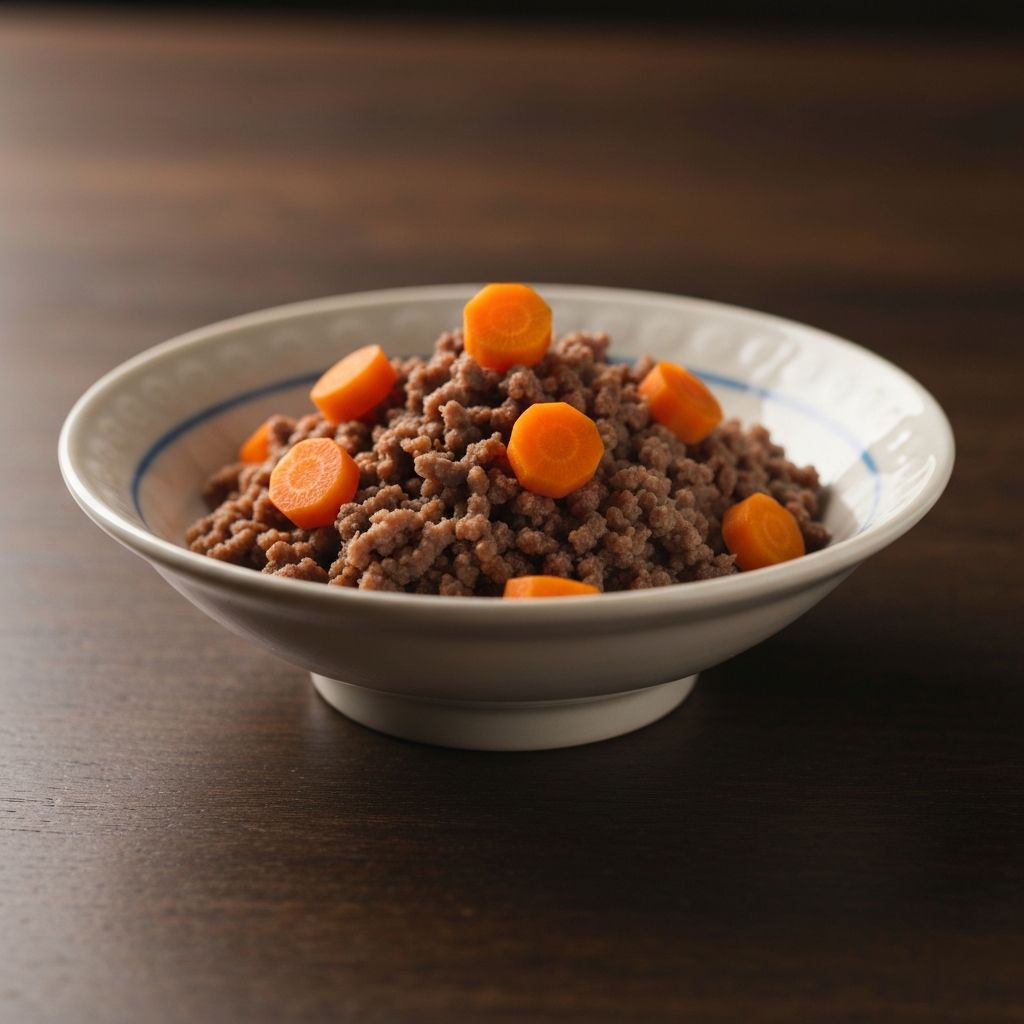
57. Beef with Carrot
Ingredients: 140 g lean beef, 1 tbsp cooked carrot
Preparation: Boil the beef completely until fully done. Chop the meat and cooked carrot into tiny, manageable pieces.
Calorie Content: ~214 kcal
58. Beef with Pumpkin
Ingredients: 130 g lean beef, 2 tbsp cooked pumpkin puree
Preparation: Cook the beef thoroughly and blend or chop it lightly with plain, unseasoned pumpkin puree.
Calorie Content: ~201 kcal
59. Beef Liver with Pumpkin
Ingredients: 80 g beef liver, 2 tbsp cooked pumpkin puree
Preparation: Cook the beef liver completely through. Mash it finely with a fork and integrate it into the pumpkin puree.
Calorie Content: ~112 kcal
60. Beef with Broccoli
Ingredients: 140 g lean beef, 1 tsp cooked broccoli
Preparation: Fully cook the beef. Chop it finely along with the steamed broccoli florets and mix.
Calorie Content: ~212 kcal
61. Beef with Cottage Cheese
Ingredients: 120 g lean beef, 1 tbsp plain cottage cheese
Preparation: Cook the beef completely, dice it into fine shreds, allow it to cool, and mix well with cottage cheese.
Calorie Content: ~192 kcal
62. Beef with Egg and Carrot
Ingredients: 120 g lean beef, half a hard-boiled egg, 1 tsp cooked carrot
Preparation: Finely chop the fully cooked beef, hard-boiled egg, and carrot, then combine them in a bowl.
Calorie Content: ~220 kcal
63. Beef with Zucchini
Ingredients: 140 g lean beef, 2 tbsp cooked zucchini
Preparation: Cook the beef and zucchini. Pulse them together briefly in a food processor until lightly blended.
Calorie Content: ~213 kcal
64. Beef with Pumpkin and Oats
Ingredients: 130 g lean beef, 1 tbsp pumpkin puree, 1 tsp cooked plain oats
Preparation: Cook plain oats in water. Combine with the fully cooked minced beef and pumpkin puree.
Calorie Content: ~211 kcal
65. Beef with Parsnip
Ingredients: 140 g lean beef, 1 tbsp cooked parsnip
Preparation: Cook the beef and parsnip thoroughly. Blend lightly into a soft texture suitable for chewing.
Calorie Content: ~215 kcal
66. Beef with Rice
Ingredients: 130 g lean beef, 1 tbsp cooked white rice
Preparation: Cook the beef completely through and shred it. Mix thoroughly with the plain cooked rice.
Calorie Content: ~225 kcal
67. Beef with Zucchini and Egg
Ingredients: 130 g lean beef, 1 tbsp cooked zucchini, half a hard-boiled egg
Preparation: Finely chop the cooked beef, zucchini, and egg, then toss together until evenly mixed.
Calorie Content: ~241 kcal
68. Beef with Pumpkin and Cottage Cheese
Ingredients: 130 g lean beef, 1 tbsp pumpkin puree, 1 tbsp plain cottage cheese
Preparation: Mix the finely diced cooked beef with pumpkin puree and plain cottage cheese.
Calorie Content: ~218 kcal
69. Beef with Carrot and Pumpkin
Ingredients: 130 g lean beef, 1 tsp cooked carrot, 1 tbsp pumpkin puree
Preparation: Blend the fully cooked beef lightly with the carrot puree and pumpkin puree.
Calorie Content: ~208 kcal
70. Beef with Egg
Ingredients: 130 g lean beef, half a hard-boiled egg
Preparation: Chop the cooked beef into fine shreds and mix evenly with the mashed hard-boiled egg.
Calorie Content: ~238 kcal
71. Beef with Broccoli and Carrot
Ingredients: 130 g lean beef, 1 tsp cooked broccoli, 1 tsp cooked carrot
Preparation: Mince the cooked beef and combine it with finely chopped broccoli and carrots.
Calorie Content: ~204 kcal
72. Beef with Cottage Cheese and Pumpkin
Ingredients: 130 g lean beef, 1 tbsp cottage cheese, 1 tbsp pumpkin puree
Preparation: Combine the diced cooked beef with plain cottage cheese and pumpkin puree. Mix well.
Calorie Content: ~218 kcal
73. Beef with Pumpkin and Egg
Ingredients: 130 g lean beef, 1 tbsp pumpkin puree, half a hard-boiled egg
Preparation: Mince the beef and egg, then fold them into the plain pumpkin puree.
Calorie Content: ~244 kcal
74. Beef Liver with Carrot
Ingredients: 100 g beef liver, 1 tsp cooked carrot
Preparation: Cook the beef liver thoroughly to kill pathogens. Mash completely and mix with the carrot puree.
Calorie Content: ~142 kcal
75. Beef with Zucchini and Broccoli
Ingredients: 130 g lean beef, 1 tbsp cooked zucchini, 1 tsp cooked broccoli
Preparation: Chop the cooked vegetables and beef into a very fine mince and mix well.
Calorie Content: ~205 kcal
76. Beef with Cottage Cheese and Carrot
Ingredients: 130 g lean beef, 1 tbsp cottage cheese, 1 tsp cooked carrot
Preparation: Mix the minced cooked beef and carrot together, then stir in the cottage cheese.
Calorie Content: ~214 kcal
77. Beef with Oats and Pumpkin
Ingredients: 130 g lean beef, 1 tsp cooked plain oats, 1 tbsp pumpkin puree
Preparation: Cook the oats in water. Combine with the minced cooked beef and pumpkin.
Calorie Content: ~211 kcal
Chapter 4
Turkey Recipes
Recipes 78-100
Lean, nutritious turkey meals, comforting soups, and soft blends for cats of all ages.
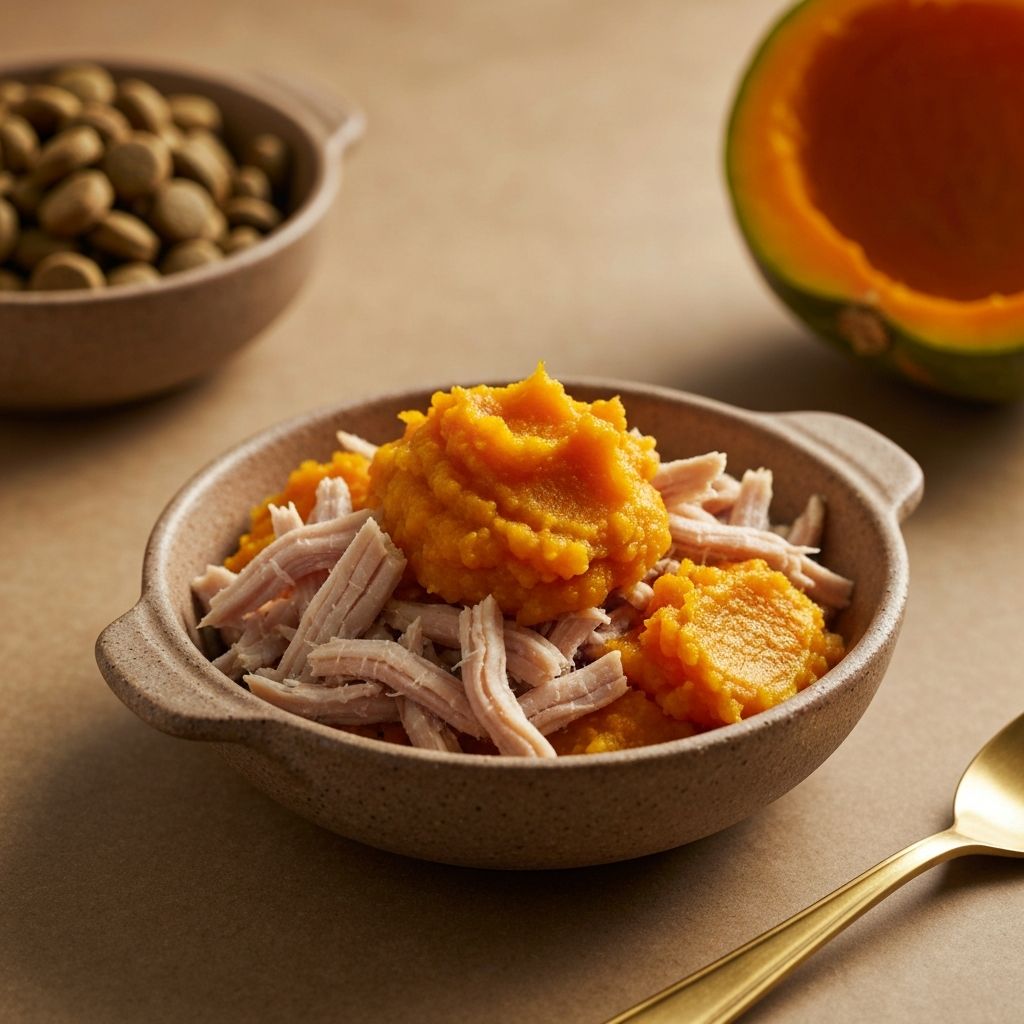
78. Turkey with Zucchini
Ingredients: 150 g turkey breast, 2 tbsp cooked zucchini
Preparation: Cook the turkey and zucchini thoroughly. Mix them together after chopping into tiny bits.
Calorie Content: ~183 kcal
79. Turkey with Rice
Ingredients: 120 g turkey breast, 1 tbsp cooked white rice
Preparation: Boil the turkey completely, shred it, and mix thoroughly with the cooked rice.
Calorie Content: ~155 kcal
80. Turkey with Egg
Ingredients: 130 g turkey breast, 1 hard-boiled egg
Preparation: Finely chop the cooked turkey breast and whole hard-boiled egg and mix well.
Calorie Content: ~225 kcal
81. Turkey Mousse
Ingredients: 130 g turkey breast, 2 tbsp water
Preparation: Place fully cooked turkey breast and water into a blender. Puree until smooth and mousse-like.
Calorie Content: ~150 kcal
82. Turkey with Parsnip
Ingredients: 140 g turkey breast, 1 tbsp cooked parsnip
Preparation: Cook both ingredients until tender. Blend into a smooth, easy-to-swallow mixture.
Calorie Content: ~167 kcal
83. Turkey with Pumpkin and Rice
Ingredients: 120 g turkey breast, 1 tbsp pumpkin puree, 1 tsp cooked white rice
Preparation: Mix the cooked rice and pumpkin together, then stir in the minced cooked turkey.
Calorie Content: ~154 kcal
84. Turkey with Cottage Cheese and Pumpkin
Ingredients: 120 g turkey breast, 1 tbsp cottage cheese, 1 tbsp pumpkin puree
Preparation: Mix the shredded cooked turkey breast with cottage cheese and plain pumpkin.
Calorie Content: ~161 kcal
85. Turkey with Broccoli
Ingredients: 140 g turkey breast, 1 tsp cooked broccoli
Preparation: Cook the ingredients through and chop into a very fine mince before serving.
Calorie Content: ~163 kcal
86. Turkey Liver with Pumpkin
Ingredients: 100 g turkey liver, 2 tbsp pumpkin puree
Preparation: Ensure the liver is completely cooked. Mash it thoroughly and mix with the pumpkin.
Calorie Content: ~146 kcal
87. Turkey with Carrot
Ingredients: 140 g turkey breast, 1 tsp cooked carrot
Preparation: Chop the fully cooked turkey breast and soft carrots into very fine pieces and mix.
Calorie Content: ~164 kcal
88. Turkey with Cottage Cheese
Ingredients: 130 g turkey breast, 1 tbsp plain cottage cheese
Preparation: Shred the cooked turkey breast, allow it to cool down, and mix thoroughly with cottage cheese.
Calorie Content: ~162 kcal
89. Turkey with Parsnip and Pumpkin
Ingredients: 130 g turkey breast, 1 tsp cooked parsnip, 1 tbsp pumpkin puree
Preparation: Steam the parsnip and pumpkin. Mix with finely shredded cooked turkey and blend lightly.
Calorie Content: ~160 kcal
90. Turkey Soup for Cats
Ingredients: 140 g turkey breast, 250 ml water, a little pumpkin
Preparation: Simmer the turkey and pumpkin in plain water on low heat. Shred meat and serve in its warm broth.
Calorie Content: ~161 kcal
91. Turkey with Egg and Zucchini
Ingredients: 130 g turkey breast, half a hard-boiled egg, 1 tbsp cooked zucchini
Preparation: Chop the cooked turkey, egg, and zucchini into fine pieces and mix together.
Calorie Content: ~193 kcal
92. Turkey with Broccoli and Pumpkin
Ingredients: 130 g turkey breast, 1 tsp cooked broccoli, 1 tbsp pumpkin puree
Preparation: Mix all fully cooked ingredients together in a clean bowl until completely blended.
Calorie Content: ~158 kcal
93. Turkey with Rice and Pumpkin
Ingredients: 130 g turkey breast, 1 tsp cooked white rice, 1 tbsp pumpkin puree
Preparation: Cook the ingredients and mix well into a uniform meal.
Calorie Content: ~166 kcal
94. Turkey with Zucchini and Egg
Ingredients: 130 g turkey breast, 1 tbsp cooked zucchini, half a hard-boiled egg
Preparation: Chop all ingredients finely after cooking and mix them evenly.
Calorie Content: ~193 kcal
95. Turkey with Oats
Ingredients: 130 g turkey breast, 1 tsp cooked plain oats
Preparation: Cook plain oats in water and stir in the minced, fully cooked turkey breast.
Calorie Content: ~160 kcal
96. Turkey with Broccoli and Egg
Ingredients: 130 g turkey breast, 1 tsp cooked broccoli, half a hard-boiled egg
Preparation: Chop the cooked ingredients finely and combine into a bowl.
Calorie Content: ~190 kcal
97. Turkey with Carrot and Oats
Ingredients: 130 g turkey breast, 1 tsp cooked carrot, 1 tsp cooked plain oats
Preparation: Cook the oats in water. Combine with the minced cooked turkey and carrots.
Calorie Content: ~162 kcal
98. Turkey with Parsnip and Rice
Ingredients: 130 g turkey breast, 1 tsp cooked parsnip, 1 tsp cooked white rice
Preparation: Fully cook all components. Shred the meat and mix all elements together well.
Calorie Content: ~162 kcal
99. Turkey with Egg and Pumpkin
Ingredients: 130 g turkey breast, half a hard-boiled egg, 1 tbsp pumpkin puree
Preparation: Mix the minced cooked turkey and egg into plain, unseasoned pumpkin puree.
Calorie Content: ~193 kcal
100. Turkey with Zucchini and Pumpkin
Ingredients: 130 g turkey breast, 1 tbsp cooked zucchini, 1 tbsp pumpkin puree
Preparation: Finely shred the cooked turkey and mix with the zucchini and pumpkin puree.
Calorie Content: ~165 kcal
Daily Calorie & Portion Guide for Cats
Cooking a healthy meal is only half the battle; serving the correct portion size is what keeps your cat thriving. Unlike humans, a few extra ounces of food can cause a cat to rapidly gain weight, putting dangerous stress on their joints, heart, and liver.
Step 1: Calculate Your Cat's Daily Caloric Needs
An average, inactive adult indoor cat requires approximately 40 to 50 calories per kilogram of body weight per day.
- 3.0 kg (6.6 lbs): ~135 - 150 Calories per day
- 4.0 kg (8.8 lbs): ~180 - 200 Calories per day (Average adult indoor cat)
- 5.0 kg (11.0 lbs): ~225 - 250 Calories per day
- 6.0 kg (13.2 lbs): ~270 - 300 Calories per day
Step 2: Reading the Recipe Calories
Every single recipe in this book has a calculated Calorie Content listed at the bottom. Use this to divide portions appropriately for your cat's daily needs.
Step 3: Structuring the Daily Portion Routine
- The Two-Meal Split (Standard): Divide the daily calculated calorie portion into two equal meals served 12 hours apart.
- The Three-Meal Split: If your cat is prone to vomiting bile or begging for food midday, divide their daily allowance into three smaller portions.
- The Topper Method: Replace 25% of their daily commercial food with 25% of the calculated homemade calorie portion.
Serving Tip: Never serve food straight from the refrigerator. Cold food suppresses the natural aromas of the meat and can cause stomach cramps. Always let the portion sit until it reaches room temperature.
A-Z Safe Vegetables & Grains Quick Reference
While cats are obligate carnivores and derive all their essential vitamins from meat, small amounts of specific vegetables and grains can provide beneficial moisture and dietary fiber. As a golden rule, plant-based ingredients should never exceed 5% of your cat's total daily food intake.
B - Broccoli
Benefits: Packed with antioxidants, Vitamin C, and soluble fiber. Supports healthy immune system and aids bowel movements.
How to serve: Never serve raw. Steam or boil until very soft, then mince into microscopic pieces.
C - Carrots
Benefits: Excellent source of Beta-carotene, Vitamin K, and potassium.
How to serve: Cats cannot digest raw carrots. Boil or steam until completely soft, then puree or mash thoroughly.
O - Oatmeal (Oats)
Benefits: Highly digestible grain rich in Vitamin B-complex, iron, and soluble fiber.
How to serve: Cook plain rolled oats entirely in water. Never cook in milk, as adult cats are lactose intolerant.
P - Parsnips
Benefits: Contain healthy amounts of Vitamin C, potassium, and folate.
How to serve: Remove the skin, boil or steam until entirely tender, and mash into a smooth paste. Keep portions small.
P - Pumpkin
Benefits: The ultimate feline superfood. Incredibly high in soluble fiber and moisture. Natural remedy for both mild constipation and mild diarrhea.
How to serve: Use fresh pumpkin boiled and pureed without any added sugar, salt, or human pie spices.
R - Rice (White or Brown)
Benefits: Easily digestible carbohydrate, highly effective at binding the stool and soothing temporary stomach inflammation.
How to serve: Use fully boiled, plain rice cooked only in water. Ensure it is soft and well-mixed into the meat.
Z - Zucchini
Benefits: Extremely low-calorie and consisting of over 90% water. Provides excellent hydration, perfect for cats prone to urinary tract issues.
How to serve: Steam or bake plain zucchini slices. Finely chop or puree the flesh and skin into a soft mush.
Thank You!
Thank you for choosing Chef Murdzho's recipe collection!
I hope these 100 recipes bring joy and health to your beloved feline companions. Happy cooking!
With love,
Chef Murdzho
www.myindoorcattips.com